Scientists have found a crater that didn’t exist a little more than two years ago. Named McGetchin Crater, it was created when a space rock hit the Moon sometime between April 11 and May 22, 2024.
The impact carved out a crater about 222 metres wide and 43 metres deep — roughly the length of two football fields. NASA says it is the largest newly formed impact crater ever found in the Solar System. The discovery was reported in Science Advances in September 2026.
So, is this the Moon’s biggest crater?
No. The Moon has enormous impact features that formed billions of years ago. The South Pole–Aitken Basin, for example, stretches more than 2,500 kilometres and is the Moon’s largest impact feature.
McGetchin is tiny compared with it. But McGetchin has something those ancient craters don’t: Scientists know roughly when it was born — and they have pictures from before and after the impact. That gives researchers a rare chance to study a lunar crater while it is still extremely fresh.
What hit the Moon?
Scientists believe an asteroid or comet fragment roughly the size of a three- to six-storey building slammed into the lunar surface. The collision blasted rock and dust outward, creating a bright layer of debris around the crater. An impact this large is expected to happen on the Moon only about once every century or longer, making McGetchin an unusually valuable natural experiment.
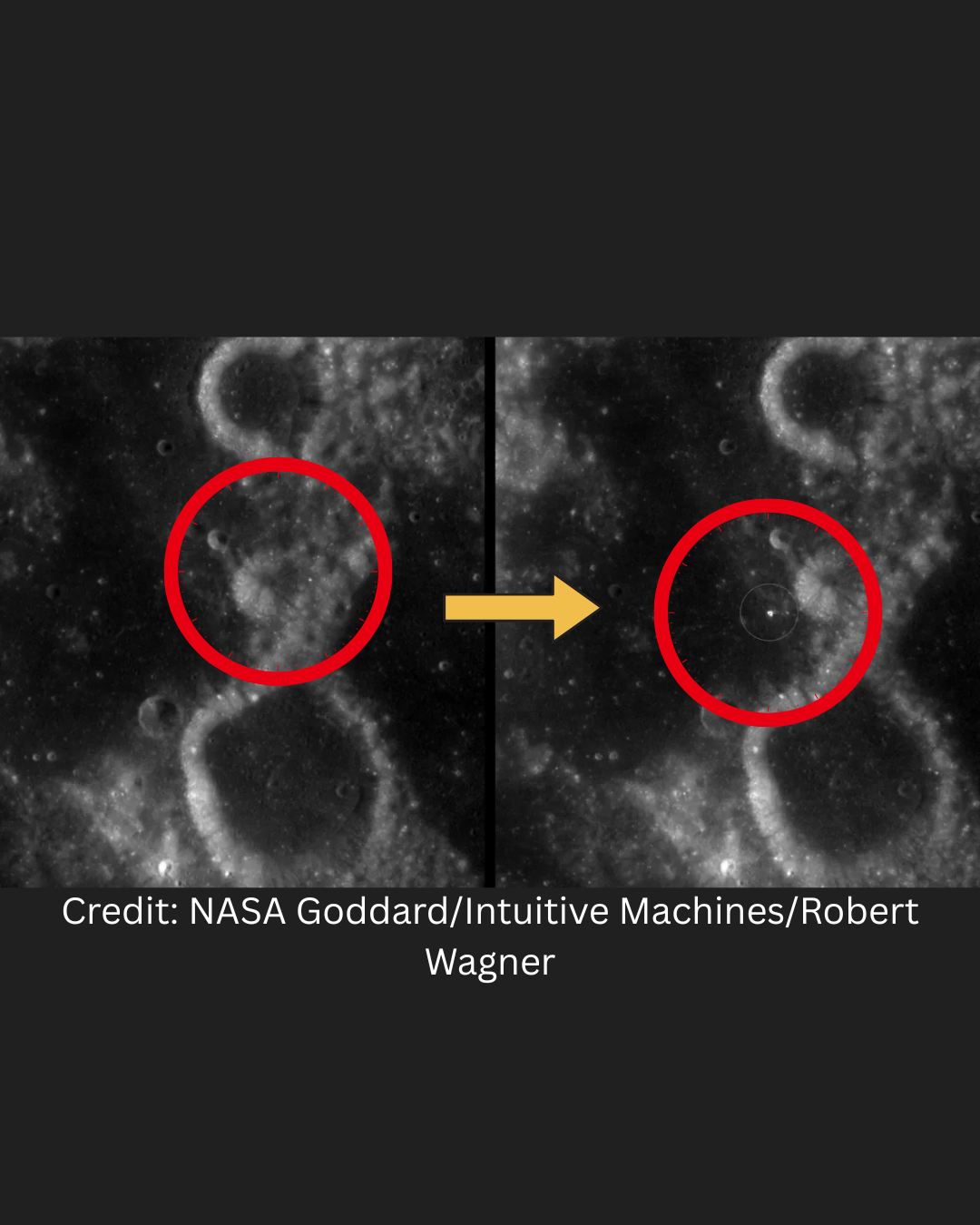
NASA caught the Moon before and after
The crater was not discovered when the impact happened. Nobody saw the collision. Instead, it was found more than a year later. On October 24, 2025, Robert Wagner, an image-processing specialist working with NASA’s Lunar Reconnaissance Orbiter Camera, was checking a huge map of the Moon.
Software was comparing images taken at different times and highlighting areas that had changed. Most changes were caused by lighting, shadows or other normal variations. Then Wagner noticed something much bigger. A bright patch surrounded by a darker halo suggested that lunar material had been thrown across the surface.
He went back to older images. The feature wasn’t there. Follow-up images from LRO’s sharper Narrow-Angle Camera confirmed the crater and allowed scientists to measure its size and shape.
“It was by far the most obvious impact debris pattern I’ve ever seen in one of these images,” Wagner said.
The impact changed much more than the crater
NASA’s Lunar Reconnaissance Orbiter also carries Diviner, an instrument that measures the Moon’s surface temperature. After the crater was discovered, Diviner data revealed a cold region about 7 kilometres (4 miles) wide around McGetchin.
At night, this area was roughly 9°C (16°F) cooler than the surrounding surface. The impact disturbed and “fluffed up” the lunar soil, known as regolith. The loosened soil is less dense and does not retain heat as efficiently, causing the surrounding area to cool more quickly after sunset.
Why scientists care about a fresh crater
Most lunar craters are ancient. Their sharp edges have been softened by billions of years of additional impacts and the constant effects of the lunar environment.
McGetchin is different. Scientists can examine the crater, its ejecta — the material thrown out during the impact — and the disturbed soil almost as a fresh geological record. That could help researchers understand how impacts reshape the Moon and how lunar soil behaves after a collision.
Space rocks continue to hit the Moon. NASA’s LRO has been orbiting the Moon since 2009 and has identified at least 1,000 new impact craters during its mission, along with many more surface changes caused by impacts and ejecta.
McGetchin simply happens to be the biggest newly formed crater scientists have found so far.
Quick Facts
Name: McGetchin Crater
Location: Moon’s eastern limb
Diameter: 222 metres
Depth: About 43 metres
Impact window: April 11–May 22, 2024
Discovered: October 24, 2025
Spacecraft: NASA’s Lunar Reconnaissance Orbiter
Estimated frequency: About once every 130 years
Named after: Lunar scientist Thomas McGetchin
Research published in:Science Advances, September 2026







We would love to hear from you. Leave your reply here.