
Before antibiotics, an infected wound could be a matter of life and death. A simple bacterial infection could spread through the body, and doctors had very few effective weapons against it. Then came penicillin.
The story of penicillin is often associated with Scottish bacteriologist Alexander Fleming, who discovered its antibacterial properties in 1928. But discovering a promising substance was only the beginning. Someone still had to figure out how it could be purified, tested and used as a medicine. That scientist was Howard Walter Florey.

Born: September 24, 1898, Adelaide, Australia
Died: February 21, 1968, Oxford, England
Field: Pathology, Pharmacology
He was an Australia-born pathologist working at the University of Oxford, Florey, together with biochemist Ernst Chain and their research team, helped transform Fleming’s laboratory observation into a usable antibacterial treatment. Their work helped usher in the antibiotic era and earned Florey, Chain and Fleming the 1945 Nobel Prize in Physiology or Medicine.
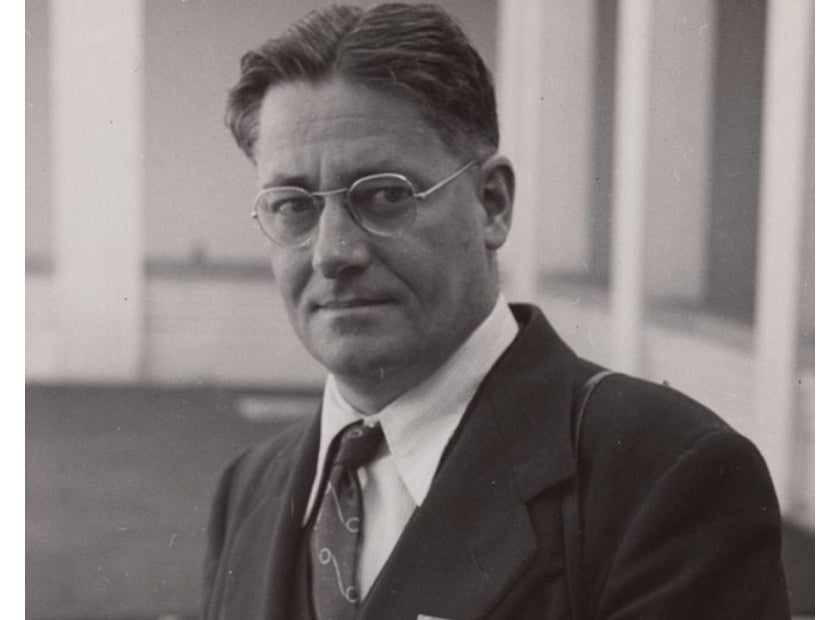
Who was Howard Florey?

Howard Walter Florey was born on September 24, 1898, in Adelaide, Australia. He studied medicine at the University of Adelaide before travelling to Britain as a Rhodes Scholar in 1921. He studied at Oxford and later completed his PhD at Cambridge. By 1935, Florey became Professor of Pathology at Oxford University’s Sir William Dunn School of Pathology. His scientific interests were broad, but he was particularly fascinated by the body’s natural defences against bacteria and by substances that could stop bacterial growth.
From Fleming’s discovery to a medicine
In 1928, Alexander Fleming noticed something unusual in his laboratory: a mould had contaminated one of his bacterial culture plates, and bacteria around the mould had been destroyed.
He called the antibacterial substance penicillin. But turning this observation into a practical drug proved extremely difficult. Years later, Florey and Ernst Chain began systematically investigating naturally occurring antibacterial substances. Their work eventually focused on penicillin.
The Oxford team faced a major challenge: how could enough penicillin be extracted and purified to test whether it could actually treat an infection inside a living body? Florey’s team developed methods to produce and concentrate the substance and began testing it.


The experiment that changed medicine

In 1940, Florey, Chain and their colleagues reported that penicillin could act as a powerful antibacterial agent inside living animals. Experiments on infected mice produced striking results. The research team then moved towards human treatment.
In 1941, penicillin was used in clinical trials involving seriously ill patients. The results demonstrated its extraordinary potential against bacterial infections. But there was another problem i.e. making penicillin in large quantities.
The team could produce enough for experiments, but mass production required industrial-scale technology. With World War II underway, the urgency was enormous. British and American scientists and pharmaceutical companies worked to solve the manufacturing challenge. Large-scale production eventually made penicillin available for treating wounded soldiers and civilians. Florey’s laboratory discovery had become a medicine that could be produced on an unprecedented scale.
Why Howard Florey’s work matters in penicillin

Florey’s contribution is important because the history of penicillin wasn’t simply about one discovery. Fleming discovered the antibacterial effect of penicillin. Florey, Chain and their colleagues helped turn that discovery into a practical treatment.
A discovery in a laboratory does not automatically become a technology, medicine or solution. It often requires years of experimentation, purification, testing, engineering and collaboration. Florey’s work was a powerful example of that process.
The Australian Dictionary of Biography describes the development of penicillin as Florey’s greatest scientific contribution and credits it with helping inaugurate the antibiotic era.
Howard Florey and the Nobel Prize
In 1945, Howard Florey, Ernst Chain and Alexander Fleming jointly received the Nobel Prize in Physiology or Medicine for their discovery of penicillin and its curative effect in various infectious diseases.
Florey had already been elected a Fellow of the Royal Society in 1941. He was knighted in 1944 and later received numerous international honours. He was also elected President of the Royal Society, serving from 1960 to 1965.
In 1965, he was created Baron Florey of Adelaide and Marston and appointed to the Order of Merit. Florey’s contribution to science did not end with penicillin. He remained deeply involved in medical research and scientific education. He played an important role in the development of the Australian National University, particularly the John Curtin School of Medical Research.
He became Chancellor of the Australian National University in 1965. He also authored or co-authored around 200 scientific papers and contributed to major works on pathology and antibiotics.


The Human Side of Howard Florey
Away from the laboratory, Florey had interests that might surprise people who picture him only as a scientist. He enjoyed tennis, travelling, photography and classical music. Later in life, he took pleasure in painting and gardening.
Despite spending most of his professional life in Britain, he remained strongly connected to Australia, the country where he was born and educated.
The Legacy of Howard Florey
Howard Florey died in Oxford on February 21, 1968, aged 69. His name lives on through research institutions, scholarships, buildings and scientific awards in Australia and Britain. His likeness has also appeared on Australia’s $50 banknote.
But his most important legacy is not a building, award or banknote. It is the transformation of an extraordinary laboratory observation into a medicine that changed the treatment of bacterial infections.
Penicillin was discovered by Fleming. But Howard Florey helped turn penicillin from a scientific possibility into a medical reality.
Found this article interesting? Subscribe to The Innovators Jam for news, views, and write-ups on innovation, science, future-tech and research.
Follow us: Instagram @theinnovatorsjam, Youtube @InnovatorsJam, LinkedIn @ The Innovators Jam





We would love to hear from you. Leave your reply here.