
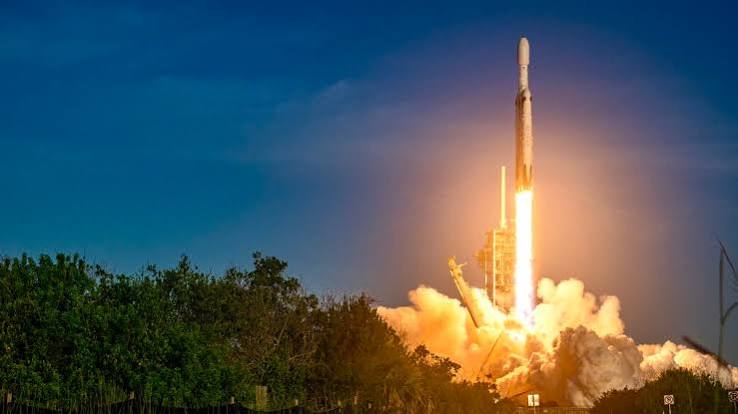
ISRO is set to launch GSLV-F17 carrying EOS-05 from Sriharikota on September 4, 2026. The mission will put India’s first dedicated imaging satellite from geosynchronous orbit on its way to a new kind of Earth-observation capability.

Indian Space Research Organisation (ISRO) is preparing for an important space launch in the early hours of Friday, September 4, 2026. This launch is scheduled to send the GSLV-F17 rocket into the sky from Sriharikota.
At 2:55 am IST, the Geosynchronous Satellite Launch Vehicle (GSLV) will lift off from the Second Launch Pad at the Satish Dhawan Space Centre carrying EOS-05, an Earth-observation spacecraft that ISRO describes as its first-ever imaging satellite from geosynchronous orbit.
Most Earth-observation satellites used for detailed imaging operate from relatively low orbits and pass over the same location periodically. EOS-05 is designed for a different job. It will operate from a geosynchronous orbit that will allow it to remain focused on a broad region of interest and provide imagery at much more frequent intervals.
What is GSLV-F17 carrying?

GSLV-F17 is the 19th flight of India’s Geosynchronous Satellite Launch Vehicle. ISRO’s mission configuration uses the four-metre-diameter ogive composite payload fairing, while the rocket itself stands 51.7 metres tall and has a liftoff mass of about 420.5 tonnes.
The three-stage vehicle uses a solid first stage with four liquid strap-ons, a liquid second stage and an indigenous cryogenic upper stage.
For this mission, GSLV-F17 is expected to inject EOS-05 into a Sub-Geosynchronous Transfer Orbit (Sub-GTO). ISRO’s mission brochure gives a nominal perigee of 170 km, an apogee of 28,934 km and an inclination of 19.28 degrees. The stated payload mass is approximately 2,367 kg.
The important point is that the rocket is not putting EOS-05 directly into its final geosynchronous orbit. The spacecraft will begin its journey in the designated transfer orbit and subsequently use its own propulsion system to reach its operational orbit.
Also Read: NASA’s Roman Space Telescope launched: Focus on dark energy, dark matter and exoplanets
Why EOS-05 is different
ISRO describes EOS-05 as a state-of-the-art Earth-observation spacecraft and, more importantly, as India’s first imaging satellite from geosynchronous orbit.
The concept behind the mission has been under development for several years. ISRO’s earlier documentation described the spacecraft as an agile geo-imaging satellite intended to provide near-real-time images of large areas at frequent intervals from geostationary orbit, particularly for monitoring natural resources and disaster events under cloud-free conditions.
That orbital position changes the economics of observation.
A conventional low-Earth-orbit imaging satellite travels rapidly around Earth. It can capture extremely detailed images, but it cannot continuously watch the same region. A satellite positioned much higher can sacrifice some of that close-up advantage while gaining something extremely useful: persistent observation of a large area.
OTHER GREAT READS:


For India, that could be valuable during rapidly developing events such as cyclones, floods, major fires and other disasters. It could also support monitoring of agriculture, natural resources and changes across large areas.
A mission that closes an unfinished chapter
There is another reason EOS-05 carries significance. India previously attempted to establish this kind of geo-imaging capability with the GISAT-1, officially designated EOS-03. That spacecraft was launched aboard GSLV-F10 on August 12, 2021, but the mission was unsuccessful. ISRO’s Earth-observation records list EOS-03 as a launch failure, and an investigation subsequently identified an anomaly in the cryogenic upper stage as the cause of the failure.
EOS-05 therefore arrives with more than a new instrument and a new orbit. It represents a renewed attempt to establish the capability that the earlier mission could not deliver.
Also Read: NASA backs 18 bold ideas for the future of space travel
What happens after launch?
The immediate objective is not to place EOS-05 directly over the equator at its final operational altitude.
GSLV-F17 will first place the spacecraft into the planned Sub-GTO. From there, EOS-05 will conduct the orbital manoeuvres required to raise and circularise its orbit before beginning operations.
ISRO’s mission brochure provides nominal orbital parameters rather than claiming that these are guaranteed post-launch values. Actual injection parameters will ultimately be known from the flight itself.
That distinction matters because launch vehicles are judged not merely by whether they leave the launch pad, but by how accurately they deliver their payload into the required orbit.
For EOS-05, that precision is particularly important because the satellite’s usefulness depends on reaching the intended geosynchronous operating environment.
When and where is the launch?
ISRO currently lists the launch for:
Mission: GSLV-F17/EOS-05
Date: Friday, September 4, 2026
Time: 2:55 AM IST
Launch site: Second Launch Pad, Satish Dhawan Space Centre, Sriharikota, Andhra Pradesh
Rocket: GSLV-F17
Payload: EOS-05
Target injection orbit: Sub-Geosynchronous Transfer Orbit (Sub-GTO)
The launch schedule is also reflected on the official SDSC-SHAR Launch View Gallery website. The gallery says viewing is free, although visitors must complete the registration process and have a government-issued ID, mobile number and email address ready.
How to watch the GSLV-F17/EOS-05 launch
ISRO is providing an official live-streaming page for the mission. The agency’s homepage also currently lists the September 4 launch at 2:55 am IST.
Official ISRO mission page: GSLV-F17/EOS-05 Mission
Official ISRO live-stream page: Watch the GSLV-F17/EOS-05 launch live
For those who want to watch the launch in person, the official Launch View Gallery at Sriharikota is currently open to the public, subject to registration. SDSC-SHAR Launch View Gallery registration
The Innovators Jam‘s take:
The mission gives ISRO an opportunity to demonstrate the reliability of GSLV while reviving a capability that was lost with the failed EOS-03 mission in 2021. The real test begins after liftoff, which is can EOS-05 reach its intended orbit and turn that vantage point into a practical, near-real-time Earth-observation service?That is what makes GSLV-F17 worth watching.
Subscribe to The Innovators Jam for the latest insights, news, analysis, and features on science, research, and innovation.
Instagram: TheInnovatorsJam Youtube: InnovatorsJam LinkedIn: The Innovators Jam







We would love to hear from you. Leave your reply here.