
The acquisition of AI coding startup Cursor by SpaceX for $60 Billion has sent shockwaves through the technology communities. At first, the deal appears unusual. Why would Elon Musk’s rocket-and-AI conglomerate spend tens of billions of dollars acquiring an AI-powered coding assistant?
The answer lies in a fundamental shift occurring across global innovation ecosystems. The next generation of technological breakthroughs will not be driven solely by better rockets, larger factories, or more powerful hardware.

They will be driven by artificial intelligence systems capable of accelerating engineering, software development, research, and product design at unprecedented speed.
For innovators, startup founders, researchers, engineers, policymakers, and investors, the SpaceX-Cursor deal represents one of the most significant signals yet that AI-powered engineering is becoming a strategic asset.
It’s a deal that redefined AI’s value:
SpaceX has agreed to acquire Anysphere, the company behind Cursor, in an all-stock transaction valued at approximately $60 Billion. The agreement was confirmed via securities filing and reported by Reuters, CNBC, and other major outlets.

Each share of Cursor’s common and preferred stock will convert into SpaceX Class A common stock, with the exchange ratio set by SpaceX’s volume-weighted average closing price in the days before closing. The deal is expected to close in the third quarter of 2026, pending regulatory approval.
The timing is notable. SpaceX completed its own Nasdaq IPO on June 12, 2026 — the largest initial public offering in history, raising roughly $75 Billion and valuing the company above $1.75 Trillion on day one. The Cursor acquisition was announced just days later, meaning one of the first major moves SpaceX made as a newly public company was the largest AI acquisition of the year.
Cursor is not a consumer chatbot. It is an AI-native development environment that helps software engineers write, debug, understand, and optimize code using large language models. Founded in 2022, Cursor grew explosively, reaching an estimated $2.6 Billion in annualized revenue by the time of the deal and a $29.3 Billion private valuation just months earlier. Microsoft had reportedly examined acquiring Cursor before stepping back, and Cursor had twice turned down approaches from OpenAI before agreeing to join SpaceX.
Also Read: ‘The Edison of our time’ – Is JPMorgan Chase’s Jamie Dimon right about Elon Musk?
What makes this acquisition noteworthy is that SpaceX is fundamentally an engineering company. Every rocket launch, satellite deployment, autonomous docking maneuver, communications network, and manufacturing process depends on software. Behind every successful mission lies millions of lines of code.
By acquiring Cursor, SpaceX is effectively investing in the future productivity of engineers.
Why software has become the new rocket fuel:
Historically, aerospace innovation depended on breakthroughs in propulsion, materials science, and manufacturing. Today, software is becoming equally important.

Modern aerospace systems generate enormous amounts of data. They rely on navigation, simulation models, predictive maintenance systems, AI-assisted design tools, and sophisticated operational software.
The challenge is no longer simply building hardware. The real challenge is building hardware faster than competitors. AI coding tools like Cursor can dramatically reduce the time required to:
- Build software systems
- Debug complex applications
- Analyze engineering data
- Create simulations
- Generate documentation
- Test mission-critical code
- Accelerate research and development
In a highly competitive environment where launch frequency, satellite deployment, and technological superiority matter, even modest productivity gains can translate into billions of dollars of value.
SpaceX appears to recognize that the future competitive advantage may belong to organizations capable of scaling engineering talent with artificial intelligence.
Also Read: The innovator behind SpaceX’s $1.75 Trillion valuation: 10 Lessons from Elon Musk
The rise of AI-native engineering:
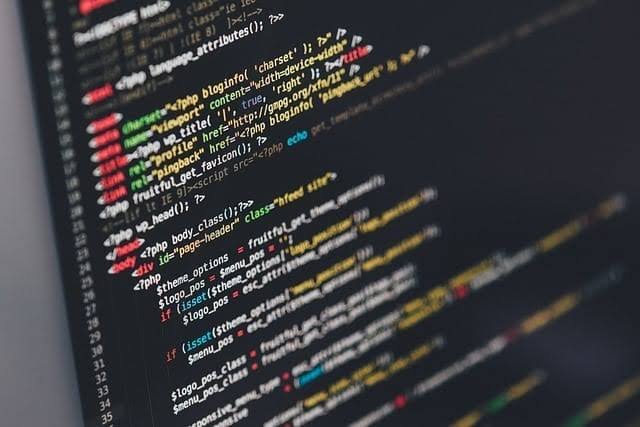
The Cursor acquisition highlights a larger trend that The Innovators Jam has been tracking across the global innovation ecosystem: the emergence of AI-native engineering.
Traditional engineering workflows involve teams of specialists working through lengthy design, development, testing, and deployment cycles.
AI-native engineering introduces intelligent systems that act as collaborators throughout the process. Instead of merely assisting engineers, AI systems increasingly:
- Generate design concepts
- Write production-ready code
- Review technical documentation
- Identify vulnerabilities
- Optimize performance
- Simulate real-world scenarios
- Automate repetitive workflows
This transformation is affecting nearly every innovation-driven industry. From aerospace and defense to biotechnology, robotics, clean energy, advanced manufacturing, and healthcare, AI is becoming a core component of product development.
The SpaceX-Cursor acquisition may therefore be viewed as one of the clearest indicators that AI engineering assistants are transitioning from useful tools into strategic infrastructure.
What this means for SpaceX’s AI ambitions:
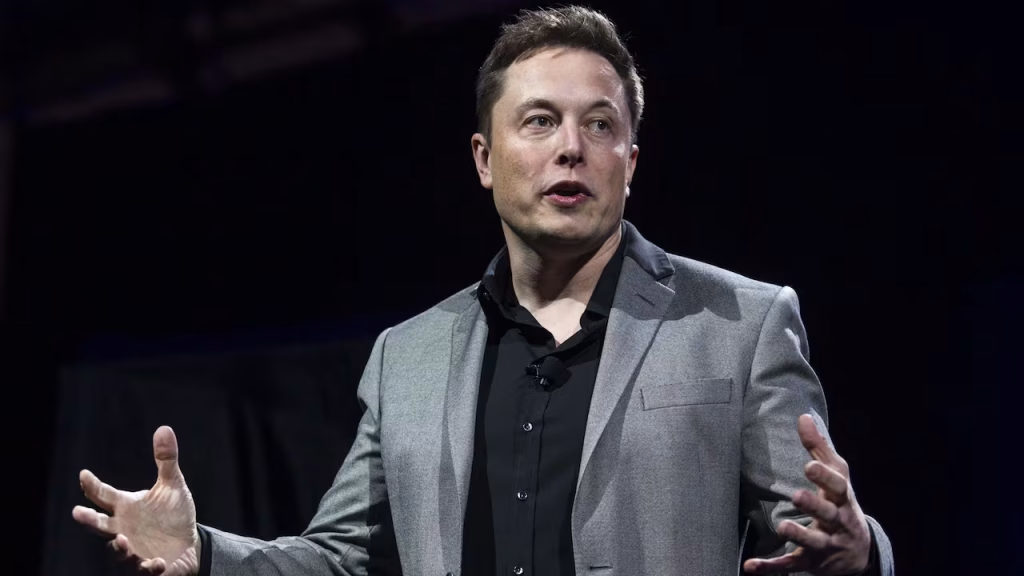
The acquisition also carries significant implications for the AI conglomerate Musk has been assembling inside SpaceX itself.
This isn’t Cursor joining a separate Musk company – it’s Cursor joining an entity that already absorbed xAI in February 2026, in a deal that merged xAI’s Grok models, its Colossus data center infrastructure, and the X social platform directly into SpaceX. With Cursor added on top, SpaceX now controls rockets, satellites, a frontier AI lab, a social network, and one of the most widely used AI coding tools — all under one roof, competing against:
- OpenAI
- Anthropic
- Meta
- Microsoft
While many AI companies focus primarily on consumer applications, Cursor brings something particularly valuable: direct integration into the daily workflow of software engineers.
Coding assistants have emerged as one of the first AI categories capable of generating substantial recurring revenue while delivering measurable productivity improvements. SpaceX has already said it plans to release a jointly trained AI model across both Cursor and Grok Build, xAI’s own coding agent — meaning the integration work was underway well before the acquisition was formally announced.
By folding Cursor into the same organization as xAI’s models and SpaceX’s engineering operations, Musk gains a tightly closed loop: an AI lab, a coding tool used by engineers worldwide, and one of the most demanding hardware businesses on the planet, all generating data and feedback for each other.
Lessons for India’s innovation ecosystem:
For India, the SpaceX-Cursor deal offers several important lessons.
India has become one of the world’s largest technology talent hubs. The country continues to produce successful startups across sectors including:
- Space technology
- Artificial intelligence
- Biotechnology
- Health technology
- Financial technology
- Agritech
- DeepTech manufacturing
However, the next generation of unicorns may not emerge from software alone or hardware alone. Instead, the biggest opportunities may lie at the intersection of both.
Companies that combine physical systems with AI-powered intelligence are increasingly attracting investor attention.
Why should innovators pay attention:
The SpaceX-Cursor acquisition will likely be remembered as more than a major technology deal. It may become one of the defining moments in the evolution of AI-powered innovation.
As artificial intelligence becomes embedded within engineering workflows, companies will increasingly compete on their ability to accelerate invention rather than simply scale operations.
The organizations that master AI-native engineering will shape the future of aerospace, healthcare, climate technology, robotics, advanced manufacturing, and countless other industries.
At The Innovators Jam, we closely track the breakthroughs, startups, research initiatives, technologies, innovation ecosystems, deep-tech ventures, and emerging trends that are shaping tomorrow’s world. Our mission is to help innovators, entrepreneurs, researchers, students, investors, and industry leaders understand not just what is happening today — but what will matter next.
The Cursor acquisition is one such moment. Because the next great innovation race may not be won by the company with the biggest factory or the most rockets. It may be won by the company whose AI helps engineers invent faster than everyone else.
Found this article interesting? Subscribe to The Innovators Jam for articles, news, views, and write-ups on innovation, science and research.
Follow us on Instagram @theinnovatorsjam, Youtube @InnovatorsJam, LinkedIn @ The Innovators Jam




We would love to hear from you. Leave your reply here.