

Born: July 20, 1822, Hynčice, Silesia, Austrian Empire (now Czech Republic)
Died: January 6, 1884, Brno, Moravia
Field: Botany, heredity, genetics
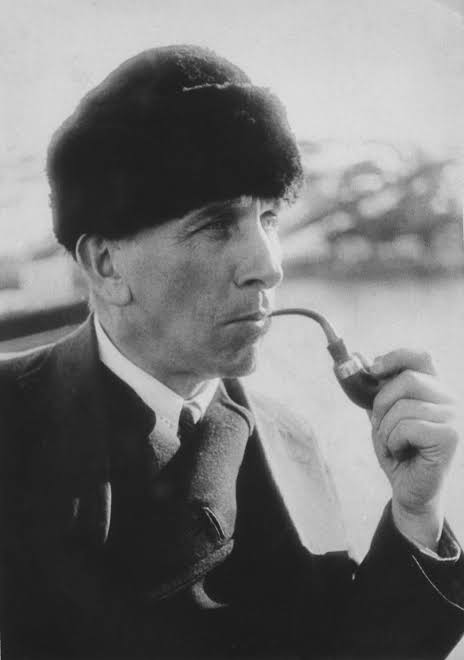
Gregor Mendel didn’t set out to rewrite biology. He was an Augustinian friar with a knack for mathematics, tending a modest experimental garden at St. Thomas’s Abbey in Brno. It was there, almost quietly, that he ran one of the most consequential experiments in the history of science.
The becoming on Mendel’s Law of Inheritance:
Between 1856 and 1863, Mendel bred and cross-bred roughly 28,000 pea plants, tracking seven distinct traits — seed shape, pod color, flower position, and more — across generations. Where earlier naturalists had treated heredity as a blend, like mixing paint, Mendel counted. He recorded exact ratios of traits across thousands of offspring and noticed something no one had articulated before: traits didn’t blend, they segregated and recombined in predictable, countable patterns.
That insight became the basis for what are now taught worldwide as Mendel’s Laws of Inheritance — the Law of Segregation and the Law of Independent Assortment. In 1866, he published his findings in Versuche über Pflanzen-Hybriden (“Experiments on Plant Hybrids”). It would take the scientific world 34 years to notice.
Also read: Rosalind Franklin: The Scientist Whose Images Helped Reveal DNA’s Structure
Beyond the pea garden: A discovery ahead of its time

Mendel presented his work to the Natural History Society of Brno in 1865, and it was published the following year. It was barely noticed. There was no concept of a “gene” yet, no framework for statistical biology, and Mendel’s meticulous, math-heavy approach didn’t fit the naturalist style of his era.
In 1868, Mendel was elected Abbot of his monastery, and administrative duties gradually pulled him away from active research. He died in 1884, largely unrecognized for the work that would eventually carry his name into every biology textbook on Earth.
It wasn’t until 1900 — sixteen years after his death — that three botanists working independently, Hugo de Vries, Carl Correns, and Erich von Tschermak, rediscovered Mendel’s paper and realized he had already solved the problem they were each chasing. That rediscovery is considered the formal birth of the science of genetics.
Gregor Mendel’s innovations & its impact:

Mendel’s pea-garden statistics became the foundation on which modern genetics was built. His segregation and assortment principles underpin everything from crop breeding and genetic counseling to the eventual discovery of DNA’s structure by Watson, Crick, Franklin, and Wilkins nearly a century later.
His story is also a reminder that impactful innovation doesn’t always land immediately. Mendel’s breakthrough sat unread in a scientific journal for over three decades before the world caught up to it.
Quick facts about Gregor Mendel:
- Studied physics, mathematics, and natural history at the University of Vienna before returning to monastic life
- Bred and analyzed close to 28,000 pea plants over eight years of experimentation
- The word “genetics” wasn’t coined until 1905 — more than 20 years after Mendel’s death
- The Mendelian Society and various institutes worldwide continue to honor his name in genetics research today
Found this article interesting? Subscribe to The Innovators Jam for news, views, and write-ups on innovation, science and research. Follow us on Instagram @theinnovatorsjam, Youtube @InnovatorsJam, LinkedIn @ The Innovators Jam



We would love to hear from you. Leave your reply here.