A decade ago, the idea of a private Indian company building rockets and attracting tens of millions of dollars from global investors would have sounded unrealistic. Today, that impossible dream has come true in Hyderabad.
City-based Skyroot Aerospace has secured $60 million in fresh funding, pushing it into the global spotlight, investors’ interest areas and made it India’s first space-tech unicorn.
Skyroot didn’t earn investor confidence simply by promising to reach space. It built real rocket technology and innovated in every sphere in which it works. From 3D-printed rocket engines and lightweight carbon-composite launch vehicles to advanced cryogenic propulsion systems and the historic Vikram-S Launch, the company spent the past few years strengthening its product range.
So what exactly did Skyroot build that convinced investors to back it with the recent $60 million trench? The Innovators Jam decodes Skyroot’s journey:

1. The Vikram Rocket Family: India’s Private Launch Platform
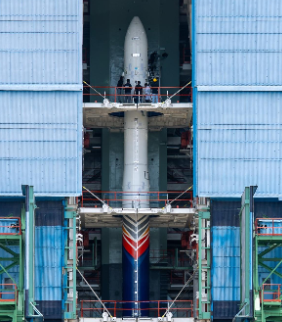
The backbone of Skyroot’s business is a series of Vikram launch vehicles. Named after Vikram Sarabhai, these rockets are designed for the booming small-satellite market. The family includes:
- Vikram-S — a suborbital technology demonstrator
- Vikram-1 — an orbital launch vehicle for commercial satellites
- Future Vikram-2 and Vikram-3 systems under development
This architecture allows Skyroot to serve different payload classes. For investors, this is critical: Skyroot is not building just one rocket, it is building a complete launch ecosystem.
2. The Vikram-S’ Launch
In deep-tech, prototypes matter but launches matter even more. When Skyroot successfully launched Vikram-S, it became the first private Indian company to send a rocket to space. That single mission spelled victory for the company. Instead of investing in a concept, investors were now backing a company that had already demonstrated:
- Flight readiness
- Mission execution
- Systems integration
- Regulatory compliance
- Real-world launch capability
3. 3D-Printed Rocket Engines
One of Skyroot’s biggest technological advantages is its use of additive manufacturing. Its Raman engines are built using advanced 3D printing techniques. Why this matters:
- Fewer components
- Faster production cycles
- Lower manufacturing costs
- Easier design iteration
- Better scalability
Traditional rocket engines can contain hundreds of individual parts. By using 3D printing, Skyroot dramatically simplifies production while improving reliability. This puts it in the same innovation category as global players like SpaceX and Rocket Lab.
4. Carbon Composite Rocket Structures
Rocket performance depends heavily on weight. Skyroot has invested in lightweight carbon composite structures for its launch vehicles. It’s benefits include:
- Lower structural mass
- Improved fuel efficiency
- Higher payload capability
- Lower launch costs
- Better performance-to-weight ratio
In the commercial launch market, even small weight reductions can translate into major cost advantages.
5. Cryogenic Propulsion Development
Skyroot is also investing in one of aerospace engineering’s toughest challenges—cryogenic propulsion. Its Dhawan engine program signals long-term ambitions beyond suborbital launches. Cryogenic engines are essential for:
- Heavy payload missions
- Precise orbital insertion
- Deep-space capabilities
- Future interplanetary missions
For investors, this demonstrates that Skyroot is building for decades.
6. Flight Software, Avionics, and Guidance Systems
Modern rockets are software-driven machines. Skyroot has developed its own:
- Flight computers
- Guidance and navigation systems
- Telemetry platforms
- Mission control software
- Autonomous flight systems
Owning both hardware and software creates stronger intellectual property and higher barriers for competitors.
7. Gaining From India’s Private Space Economy
Following policy reforms enabled by the Indian Space Research Organisation ecosystem, Skyroot moved quickly to build launch-ready infrastructure and partnerships. This first-mover advantage helped position the company as one of India’s most credible commercial space players.






We would love to hear from you. Leave your reply here.